

Why OTT Supply Chain Transparency Matters

A streaming campaign can look efficient on paper and still lose budget before an impression ever reaches the screen. That is the core issue behind OTT supply chain transparency. If buyers cannot see who touches the inventory, what each layer charges, and how media gets routed to premium publishers, they cannot accurately judge performance, pricing, or working media.
For advertisers and agencies buying premium OTT and CTV inventory, this is not a theoretical concern. It affects reach, frequency, CPM quality, reporting confidence, and the simple question every marketer should ask: how much of my budget is actually funding media versus funding the path to media?
What OTT supply chain transparency actually means
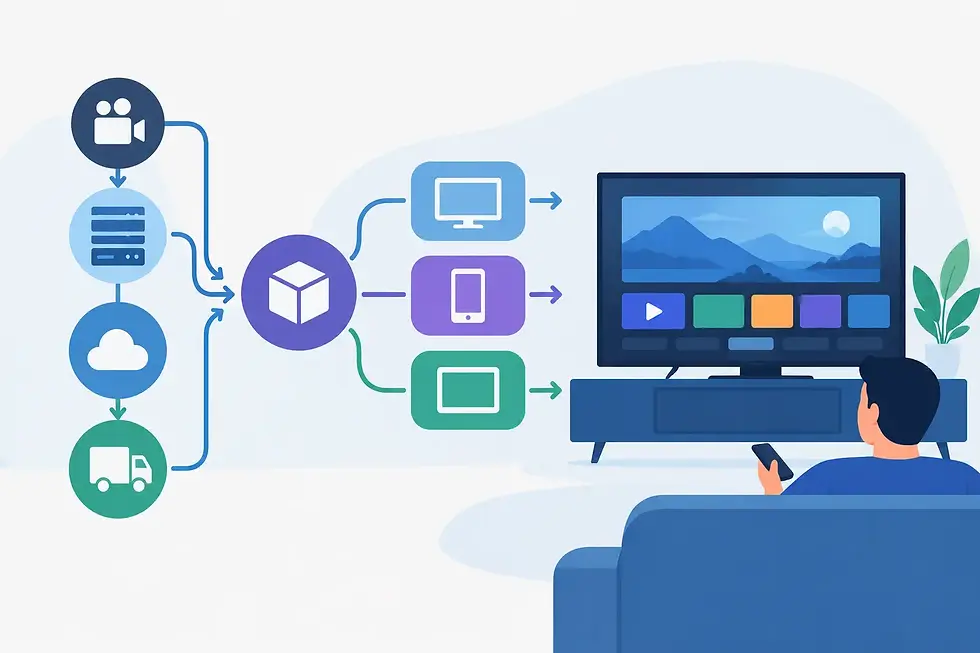
OTT supply chain transparency means having a clear view of the transaction path between advertiser and publisher. That includes the platforms involved, the number of hops in the buying path, the fees applied along the way, and the identity and quality of the inventory source.
In practice, transparency is not just about receiving a spreadsheet full of supply-chain object data. It means knowing whether a campaign ran through direct publisher-connected access or through a chain of exchanges, SSPs, resellers, data layers, verification vendors, and managed-service markups. It also means understanding whether those costs improved outcomes or simply reduced working media.
This matters more in OTT than many buyers assume. Premium streaming inventory carries higher value because of audience quality, content environment, and brand safety. When that inventory is accessed through unnecessary intermediaries, advertisers often pay premium rates without getting a premium buying structure.
Where budget leakage happens in OTT
Most budget leakage does not come from one dramatic fee. It usually comes from stacked costs across the supply path.
A campaign may start with a reasonable media budget, but by the time it passes through a DSP, a reseller, an SSP, a managed-service layer, data fees, targeting costs, and measurement charges, a meaningful share of spend has been absorbed before delivery. Some of those costs may be justified. Many are simply a result of a fragmented path.
That distinction matters. Buyers do not need a zero-fee ecosystem. They need a supply chain where each participant adds measurable value. If a layer improves targeting, protects brand safety, or supports required reporting, that can be a valid trade-off. If a layer exists because the market became dependent on convenience resellers and duplicated access points, the advertiser is likely paying for complexity rather than performance.
Why OTT supply chain transparency is now a buying requirement
Streaming budgets are no longer experimental. For many advertisers, OTT and CTV sit alongside linear, paid social, and search as core channels. That shift raises the standard for accountability.
As budgets increase, so does pressure from finance teams, procurement, and agency leadership to explain where money went and what it bought. Broad performance claims are no longer enough. Buyers want to know which publishers ran, what environments were reached, how inventory was sourced, and how much margin sat between budget and impression.
OTT supply chain transparency supports all of that. It turns a media plan from a black box into an operating model. It also gives buyers a better basis for comparing partners. Two vendors may both promise premium streaming reach, but the one using a shorter, cleaner path will usually deliver more efficient media economics.
Premium inventory does not automatically mean transparent inventory
This is where many campaigns go off track. A partner may say they provide access to major streaming publishers, and that may be true. But access alone does not tell you whether the route is direct, exclusive, duplicated, or marked up through multiple layers.
The difference is significant. Premium publisher inventory bought through a simplified supply path tends to offer stronger cost control and clearer accountability. The same publisher inventory accessed through a long chain can still perform, but buyers often sacrifice margin visibility and operational control.
This is why experienced OTT buyers look past logos on a proposal. They ask how the inventory is sourced, who the contractual relationships sit with, and whether the platform is reducing intermediaries or adding another one.
What buyers should ask before they commit budget
The right questions are operational, not promotional. Ask who the direct supply relationships are with. Ask whether inventory is sourced directly from publishers or through resold access. Ask what fees are applied by each platform in the chain and whether those fees are fixed, percentage-based, or embedded in media pricing.
Buyers should also ask whether the same inventory is available through multiple overlapping paths. If it is, that can create duplicate supply, inconsistent auction dynamics, and unnecessary markups. Supply-path simplification matters because cleaner access generally leads to better cost efficiency and more predictable delivery.
Reporting matters too. A transparent partner should be able to explain where campaigns ran, what inventory types were used, and how the supply path was structured. If answers stay vague, the problem is usually not the question.
The business impact of a cleaner OTT supply path
For advertisers, transparency is not a compliance exercise. It is a performance lever.
When fewer intermediaries sit between buyer and publisher, more budget tends to reach working media. That can improve effective reach, reduce wasted spend, and create room for stronger frequency management or broader premium publisher allocation. It also makes campaign results easier to trust because the mechanics of delivery are clearer.
There are strategic advantages as well. Transparent supply paths make it easier to assess true CPM quality, compare partners fairly, and avoid paying premium prices for commoditized video environments packaged to look like premium OTT.
This does not mean every campaign should be stripped down to the bare minimum number of vendors. Some advertisers need specific measurement partners, data integrations, or workflow tools. The point is to be intentional. Every layer should have a job, and that job should justify its cost.
What transparency should look like from a media partner
A credible OTT partner should be able to explain their role in plain language. They should show how inventory is sourced, how execution works, and where fees enter the process. They should not hide behind broad claims about scale if the path to that scale is full of avoidable intermediaries.
They should also align transparency with outcomes. Buyers care about fee visibility, but they care even more about what that visibility produces: more working media, better access to premium publishers, cleaner reporting, and a stronger connection between budget and delivery.
That is where a supply-side infrastructure model becomes valuable. A partner built around direct publisher-connected access can often reduce the operational clutter that inflates OTT buying. For advertisers and agencies trying to protect performance, that is not just a process improvement. It is a buying advantage.
Drive Select Media is positioned around that principle - direct access to premium streaming supply with fewer layers between budget and screen. For buyers frustrated by opaque paths and avoidable fees, that model addresses the problem at its source.
OTT supply chain transparency and the next phase of media buying
The market is moving toward tighter scrutiny, not less. Buyers are getting more disciplined about path quality, publisher access, and margin visibility. Premium streaming will continue to command attention, but the standard for how it is bought is rising.
That creates a clear divide. On one side are campaigns built around convenience, where inventory is technically available but operationally opaque. On the other are campaigns built around accountability, where the path is shorter, the economics are clearer, and the media does more of the work.
For serious OTT buyers, that difference shows up fast. It shows up in how far budget stretches, how confidently teams can report results, and how much control they actually have over premium streaming execution. The better question is no longer whether a partner can access OTT inventory. It is whether they can show you, clearly and directly, what it takes to get there.


Comments