

What Is Supply Path Optimization?

If your CTV or online video campaign touches five platforms before it reaches the publisher, your budget is doing more traveling than it should. That is the core reason buyers ask, what is supply path optimization, and why it has become a priority in streaming and programmatic video.
Supply path optimization, or SPO, is the process of choosing the most efficient, transparent route to buy digital media inventory. In practice, that means reducing unnecessary hops between the buyer and the publisher so more budget goes toward actual media delivery instead of intermediary fees. For advertisers and agencies buying premium OTT, CTV, and online video, SPO is less about theory and more about controlling cost, quality, and accountability.
What is supply path optimization in practical terms?
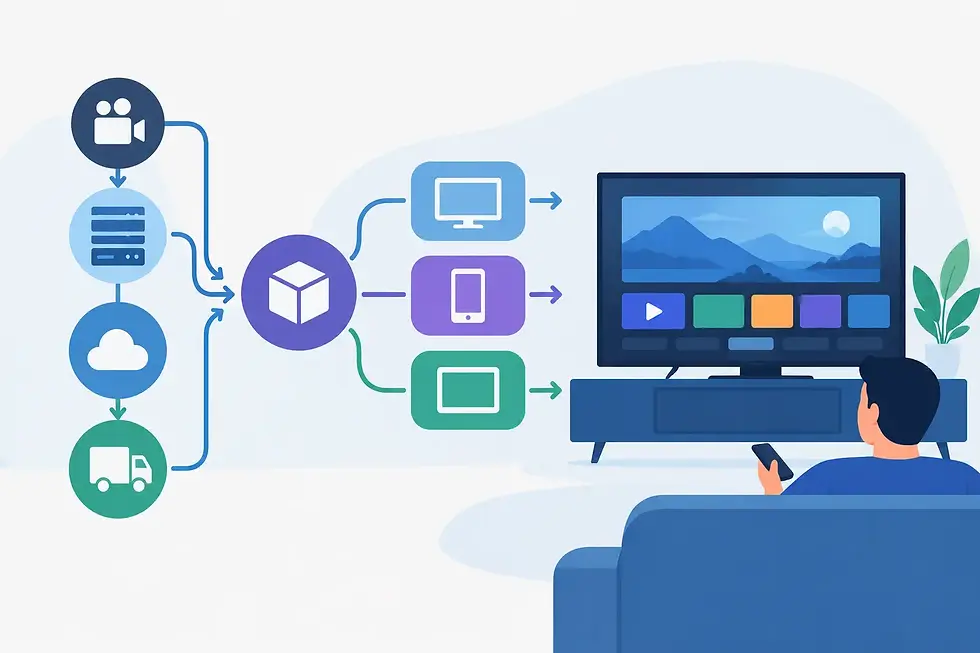
At a practical level, supply path optimization is the discipline of evaluating how inventory reaches your DSP and deciding which paths deserve spend. Not every path to the same impression is equal. One may come directly from a publisher or a close infrastructure partner. Another may pass through multiple resellers, SSPs, exchanges, and packaged deals before it appears in your bid stream.
To a buyer, both paths can look similar at the surface. The domain may be recognizable. The content category may appear premium. The CPM may not immediately raise concern. But underneath, the economics can be very different. More intermediaries typically mean more fees, less transparency, and a greater chance of duplication or unnecessary complexity.
SPO helps buyers answer a simple commercial question: what is the cleanest path to the inventory we actually want?
Why supply path optimization matters in streaming
Streaming inventory is valuable because the environment is valuable. Premium publishers command attention, household reach, and brand-safe viewing conditions that open-market video cannot consistently match. But premium supply can still be wrapped in too many layers.
That is where waste creeps in. If an advertiser is trying to reach streaming audiences on major publishers, but the path includes multiple toll collectors, the result is lower working media. The campaign may still deliver impressions, but a larger share of the budget is consumed before it reaches the screen.
For agencies and in-house teams under pressure to justify performance, this matters. A supply chain that is hard to inspect is also hard to defend. If you cannot clearly explain who touched the media, what each platform contributed, and how much margin was taken along the way, you have an efficiency problem whether the campaign paced or not.
SPO addresses that by narrowing the supply chain to trusted, direct, and cost-conscious paths. In premium OTT and CTV, that often means prioritizing publisher-connected access over layered reseller routes.
How the supply path gets inefficient
Programmatic buying was built for scale, and scale often creates duplication. The same publisher inventory can appear through several supply-side platforms, reseller relationships, curated marketplaces, and bundled access points. Buyers then bid across overlapping routes without always knowing which one is closest to the source.
That creates three common problems.
First, duplicate access inflates auction noise. If the same inventory appears through multiple channels, buyers may compete against themselves or pay through paths that add no incremental value.
Second, fee stacking reduces working media. Each intermediary may provide a technical function, but not every one improves campaign outcomes. When too many sit in the middle, the publisher receives less and the advertiser gets less efficient delivery.
Third, transparency declines as paths become more layered. Troubleshooting delivery, quality, and reporting becomes harder when multiple platforms sit between buyer and publisher.
This is why SPO is not just a procurement exercise. It is a performance and governance exercise too.
What supply path optimization looks like in execution
A serious SPO effort starts with supply chain mapping. Buyers need to understand where inventory is coming from, which partners are intermediating it, and whether those partners are adding measurable value.
From there, the focus shifts to consolidation. The goal is not to use the fewest possible platforms at any cost. The goal is to use the right platforms for the right inventory, while removing redundant or low-value paths.
In premium streaming, strong SPO usually includes direct publisher relationships, tighter SSP selection, cleaner deal structures, and more disciplined curation. It also means evaluating whether a partner is providing unique access, better economics, stronger transparency, or superior execution. If the answer is no, that path may not deserve budget.
This is where experienced buyers separate convenience from efficiency. A broad marketplace can feel easier to activate, but ease does not always mean value. In many cases, the cleaner path is the one with fewer handoffs and better visibility into where the money goes.
The main benefits of supply path optimization
The first benefit is more working media. That phrase gets used often because it is the clearest outcome. When fewer unnecessary fees are taken out of the chain, more of the budget reaches the impression.
The second benefit is better control over inventory quality. Prioritizing direct or near-direct access helps buyers stay closer to premium publishers and away from unclear resale environments.
The third benefit is cleaner reporting and accountability. When the supply chain is simplified, discrepancies are easier to identify and campaign economics are easier to explain internally.
The fourth benefit is operational efficiency. Traders and planners spend less time untangling duplicate supply, reconciling inconsistent paths, or troubleshooting opaque delivery issues.
That said, SPO is not purely about driving the lowest CPM. Sometimes a slightly higher CPM through a cleaner path is the smarter buy because it delivers stronger quality, fewer hidden costs, and better business outcomes.
What SPO is not
Supply path optimization is not a blanket rule to cut every intermediary. Some platforms provide real value through technology, identity support, scale management, forecasting, reporting, or access that would otherwise be fragmented. The point is not to remove every layer. The point is to remove unnecessary layers.
It is also not a one-time cleanup project. Supply paths change. Publisher relationships shift. New resellers appear. Deal structures evolve. A path that made sense a year ago may no longer be the most efficient route today.
And SPO is not only relevant to open exchange buying. Private marketplace and programmatic guaranteed activity can also carry avoidable complexity depending on how the inventory is packaged and delivered.
How buyers should evaluate supply partners
A good SPO lens starts with a few direct questions. Is this partner close to the publisher? Is the inventory exclusive, differentiated, or merely resold? Can the partner clearly explain the path from buyer to screen? Are fees and economics transparent? Does this path improve delivery quality or just add another stop in the chain?
For streaming buyers, publisher proximity matters. If your objective is premium OTT and CTV reach, then your supply strategy should reflect that objective. Buying premium media through indirect, opaque channels undercuts the very reason you chose premium environments in the first place.
This is also where specialized infrastructure partners can have an edge. A partner built around direct premium video access and fewer intermediaries can often deliver stronger economics than a broad supply setup that mixes high-value inventory with unnecessary supply chain layers. For advertisers focused on accountability, that difference shows up quickly.
What is supply path optimization worth to your budget?
The answer depends on how much duplication and fee leakage exists in your current setup. Some buyers find marginal improvements. Others find that a meaningful share of spend is being absorbed before it ever reaches premium inventory.
The larger and more fragmented your video budget, the more material SPO tends to become. Multi-platform CTV campaigns, agency trading environments, and layered programmatic setups are especially vulnerable to hidden inefficiency. If several vendors claim access to the same premium publishers, that is usually a signal to inspect the path more closely.
This is one reason buyers increasingly ask for supply audits before they shift budget. A proper audit can reveal where spend is routed, where duplication exists, and which paths are creating cost without adding value. For brands and agencies under pressure to do more with the same budget, that visibility is actionable.
Drive Select Media is built around that exact principle: direct, efficient access to premium streaming inventory with fewer intermediary layers and clearer budget accountability.
The real point of SPO
SPO matters because the supply chain shapes campaign economics long before performance reports are reviewed. If too much budget is lost in transit, even strong planning and creative cannot fully recover that value.
The buyers who benefit most from supply path optimization are usually the ones who stop treating inventory access as interchangeable. They understand that where media appears is only part of the story. How it gets there matters just as much.
If your goal is premium streaming reach, your buying path should be premium too - direct where possible, transparent by default, and lean enough that more of your budget ends up on the screen instead of in the middle.


Comments