

Premium Online Video Inventory That Works Harder

A streaming campaign can look efficient in a reporting dashboard while too much of the budget disappears before an ad ever reaches the screen. That is the central issue with premium online video inventory: quality supply matters, but the path used to buy it matters just as much.
For advertisers and agencies investing in CTV, OTT, and digital video, premium inventory should mean more than a familiar publisher name on a supply list. It should mean access to professionally produced programming, real audiences, brand-safe environments, and a buying structure that preserves more working media. If multiple platforms, resellers, and opaque fees sit between the buyer and the publisher, the value of that inventory is diluted.
The objective is straightforward: put more of the media budget into premium streaming environments and make campaign delivery easier to verify.
What Premium Online Video Inventory Actually Means
Premium online video inventory is ad-supported video inventory from established publishers and streaming environments where the content, audience, and delivery standards are controlled. This includes major broadcaster, studio, and streaming publisher ecosystems such as Disney, NBCU, Paramount, Amazon, and FOX.
The distinction matters because not all video impressions carry the same value. A 30-second spot delivered within professionally produced, full-episode content is not equivalent to an autoplay video unit on an unknown site, a low-quality app, or a long tail of open-market supply. Both may be labeled video. Both may appear in aggregate delivery reports. But they offer very different viewing conditions, brand associations, and likelihood of meaningful attention.
Premium supply typically provides stronger content controls, more dependable ad experiences, and a clearer understanding of where an advertiser appeared. It is especially relevant for brands that need broad household reach without compromising on environment - including automotive, retail, financial services, entertainment, and other major consumer categories.
Still, a premium publisher label alone does not guarantee an efficient buy. The supply path determines how much of the budget is retained by intermediaries and how clearly buyers can assess delivery.
The Cost of a Complicated Supply Path
Programmatic technology made video buying more flexible, but it also introduced layers that can obscure the economics of a campaign. A single impression can pass through exchanges, supply-side platforms, data providers, verification vendors, and reseller arrangements before it is purchased. Some services are necessary. Others add cost without adding meaningful value.
The result is budget leakage. Every unnecessary layer can take a fee, reducing the portion of spend that reaches the publisher and supports actual media delivery. Buyers may see acceptable CPMs but still lose reach, frequency control, or premium placement quality because too little of the budget is working on screen.
This is why supply-path optimization is not a technical exercise reserved for ad operations teams. It is a commercial issue. When the path is shorter and more direct, advertisers can often improve working media, gain cleaner reporting, and make better decisions about where to allocate incremental budget.
There is no single ideal path for every campaign. A national awareness effort may require broad publisher access and scaled household delivery. A tightly targeted initiative may need specific audience or geographic controls. The right approach depends on the objective. But in every case, buyers should be able to answer basic questions: Which publishers received the budget? What fees were applied? What portion of spend reached the media owner? And where did the ads run?
If those questions cannot be answered clearly, the campaign is harder to manage than it needs to be.
Why Direct Publisher-Connected Access Performs Better
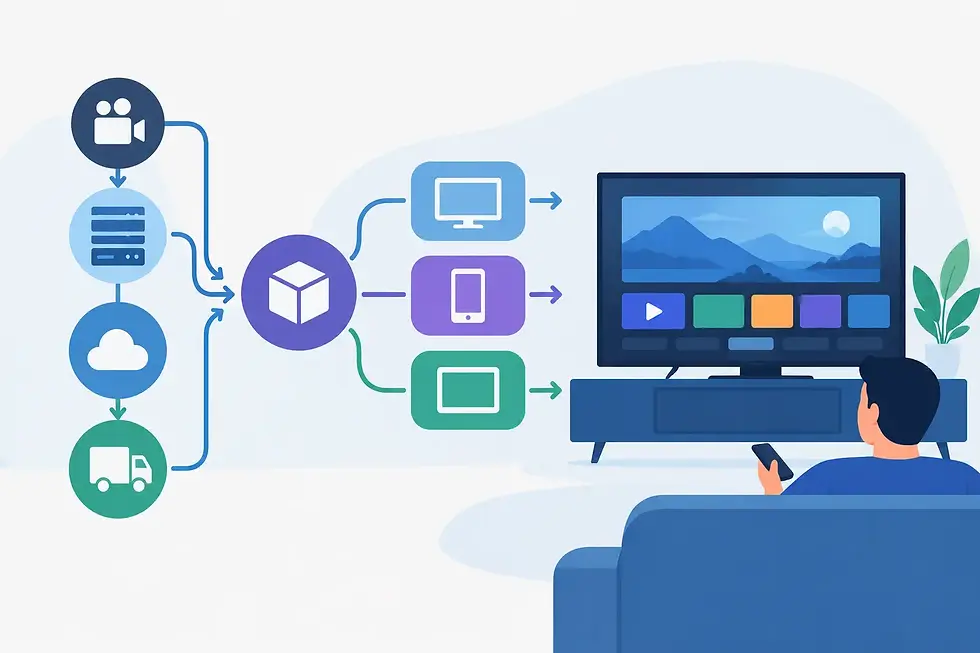
Direct publisher-connected access reduces the distance between media dollars and premium inventory. Rather than relying on a chain of resellers to reach streaming supply, advertisers can buy through infrastructure designed to connect them to the publishers more efficiently.
That approach produces three practical advantages. First, it can increase working media by reducing avoidable intermediary costs. Second, it improves transparency around the supply being purchased. Third, it gives media teams more control over execution, from publisher mix to delivery pacing and reporting.
The benefit is not simply a lower fee line. It is the ability to direct more budget toward the environments that matter. For a brand trying to reach streaming households at scale, that can mean more completed video views, more effective frequency, or broader reach within trusted publisher content - without automatically increasing the total campaign budget.
Direct access also reduces the risk of buying a diluted version of premium supply. In complex marketplaces, inventory can be packaged, repackaged, and sold through multiple routes. That can make it difficult to distinguish a direct publisher connection from a reseller path that offers less clarity and potentially less efficient economics.
Media buyers should not have to take “premium” at face value. They should expect documentation, publisher-level visibility, and an explanation of how inventory is sourced.
What to Ask Before You Buy Premium Video
A strong video plan starts with better supply questions, not just audience and pricing questions. Before committing spend, agencies and advertisers should ask whether the buying partner can identify the publisher relationships behind the inventory and explain the supply path in plain language.
They should also ask how much budget is directed to working media, whether the campaign can report at the publisher level, and what controls are available for brand suitability, geography, device, and frequency. These are not administrative details. They determine whether the campaign can be evaluated against its actual business objective.
Viewability and completion metrics remain useful, but they should not become a substitute for supply quality. A completed video view has more value when it occurs in an environment aligned with the brand, reaches the intended household, and comes through a transparent buying path. Conversely, strong surface-level engagement metrics cannot fix a campaign built on questionable supply or unclear economics.
It is also worth examining how a partner handles optimization. Optimization should improve delivery toward defined outcomes, not shift budget into cheaper inventory simply because it produces more impressions. If the goal is premium household reach, moving spend away from the publishers that define premium video can undermine the strategy.
A Better Standard for Campaign Accountability
Accountability in streaming media is not just about receiving a post-campaign report. It is about having enough visibility during planning and delivery to make informed decisions before budget is spent.
That starts with a transparent publisher strategy. Buyers should know whether their investment is going into premium streaming environments, how supply is accessed, and whether the buying structure includes unnecessary layers. It continues with clear delivery reporting that makes it possible to assess reach, frequency, completion, and publisher performance without relying on vague inventory categories.
For agencies, this level of clarity supports better client conversations. Instead of defending a complicated supply chain, trading teams can show where dollars went and why the media plan was built that way. For advertisers, it creates confidence that streaming budgets are not being diluted by avoidable fees or low-value supply substitutions.
Drive Select Media is built around this standard: direct, efficient access to premium streaming media with fewer intermediaries between the buyer and the publisher. The model is designed for media teams that want greater control of their investment without adding unnecessary operational complexity.
Premium Inventory Is a Budget Decision, Not Just a Placement Decision
Premium video is often discussed as a brand safety decision, and it is one. High-quality content environments help protect brand reputation and create a better context for the message. But the larger opportunity is financial discipline.
When buyers simplify the route to premium inventory, they can make every dollar work harder. That does not mean the lowest-cost path will always be the best path. Direct publisher-connected supply may carry a higher apparent CPM than commoditized open-market video. Yet a lower CPM is not a savings if it comes with weak content quality, uncertain delivery, fragmented reach, or excessive frequency.
The right comparison is value delivered per media dollar. Consider the quality of the viewing environment, the transparency of the source, the share of budget reaching working media, and the ability to verify results. Those factors provide a more useful measure than price alone.
Streaming budgets are too significant to treat supply as a black box. Review the path, question the fees, and require clear publisher-level accountability. The strongest premium video strategy is the one that gives your budget fewer places to disappear and more opportunities to reach the audience you paid for.


Comments