

How to Access Premium Streaming Platforms

Most streaming budgets do not miss the mark because of poor strategy. They miss because buyers think they have premium access when they are really buying through a stack of intermediaries that dilute reach, obscure fees, and make campaign quality harder to verify. If you want to know how to access premium streaming platforms, the answer is not just which DSP or data segment to use. It starts with how your supply path is built.
For advertisers and agencies, premium streaming access means more than placing video in a connected TV environment. It means reaching audiences inside professionally produced, brand-safe content from major publishers, with clear delivery terms and fewer unknowns between your budget and the screen. That distinction matters because not all streaming supply is equal, and not all access paths preserve the same amount of working media.
What premium streaming access actually means
Premium streaming platforms are not defined by device type alone. A CTV impression can still come from low-quality or resold inventory, even if it runs on a television screen. Premium access refers to inventory connected to established publishers and major streaming environments where content quality, audience scale, and brand safety are materially higher.
That usually includes large broadcaster and studio-backed platforms, major ad-supported streaming services, and trusted long-form video environments. Buyers looking for real premium access are typically trying to reach audiences across publishers such as Disney, NBCU, Paramount, Amazon, and FOX, not a mixed pool of unknown video supply bundled together and labeled as OTT.
The practical question is not whether your platform says it reaches streaming audiences. Most do. The real question is whether your buying path gives you direct, efficient access to that inventory without unnecessary reselling layers.
How to access premium streaming platforms without waste
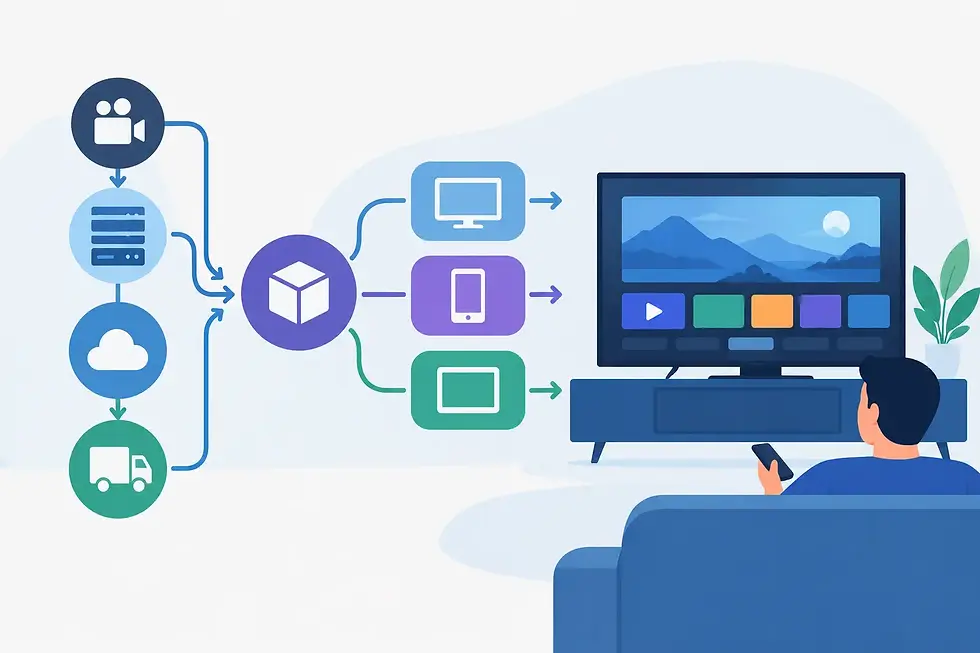
The cleanest way to access premium streaming platforms is through supply paths that are as direct as possible. In media terms, that means reducing the number of hops between the advertiser and the publisher.
Every additional intermediary can take a fee, alter auction dynamics, and reduce transparency into where impressions actually ran. In some cases, multiple parties touch the same impression before it clears. The result is familiar to any experienced buyer: CPM inflation, reporting gaps, inconsistent inventory quality, and less confidence in what percentage of budget reached the publisher.
Direct or publisher-connected access changes that equation. When supply is consolidated through a streamlined path, buyers generally gain three advantages. First, more working media reaches the screen because fewer fees are absorbed along the way. Second, inventory quality is easier to validate because the publisher relationship is closer to the transaction. Third, execution becomes simpler because campaign setup, optimization, and reporting are not spread across a fragmented supply chain.
That does not mean every campaign should be bought through the exact same route. Some buyers need broader scale, some need strict publisher lists, and some need a blended model. But if premium access is the goal, simplicity usually outperforms complexity.
The biggest mistake buyers make
The most common mistake is assuming that platform access equals premium access.
A DSP may offer thousands of OTT and CTV opportunities, but scale alone does not guarantee quality. If a campaign is built through broad exchange-based supply without clear controls, buyers can end up with a mix of premium, mid-tier, and low-signal inventory that looks efficient on paper but underdelivers in practice.
This is where many teams lose control of spend. They target a premium environment, but the mechanics of the buy route budget toward whichever impressions are easiest to clear, not necessarily the ones tied to the publishers they actually want. That gap between intended quality and actual delivery is where waste builds.
Another mistake is treating streaming as a format instead of a supply strategy. Premium streaming is not just video on a big screen. It is a buying decision about publisher quality, supply-path integrity, and financial accountability.
What to evaluate before you buy
If you are assessing how to access premium streaming platforms more effectively, start by reviewing the mechanics behind your current buying model.
Look at how many entities sit between your budget and the publisher. If the answer is unclear, that is already a problem. Buyers should understand whether they are purchasing directly connected supply, curated marketplace inventory, exchange-based traffic, or some combination of all three.
Then look at fee drag. Not every fee is avoidable, and not every intermediary is unnecessary. But many campaigns carry hidden margin layers that reduce working media without adding meaningful value. If your effective media cost keeps rising while delivery quality remains inconsistent, the supply path is often the issue.
Publisher transparency matters just as much. Ask whether you can clearly identify where your ads ran, which premium publishers were included, and how much delivery actually reached those environments. If reporting bundles supply too broadly, you may be seeing a polished summary instead of actionable transparency.
Finally, evaluate operational efficiency. Premium streaming buying should not require constant reconciliation across disconnected systems and partners. The cleaner the path, the easier it is to manage pacing, optimize toward performance goals, and defend results internally.
A better model for premium streaming media
The strongest model is built around direct publisher-connected infrastructure, not unnecessary reselling. That gives advertisers and agencies a more accountable way to buy premium OTT and online video inventory at scale.
In practice, this means working with partners that have real supply-side relationships and can provide access to premium streaming media without forcing budgets through avoidable layers. The benefit is straightforward: more of your budget goes toward media, less goes toward supply-chain friction.
This approach also supports stronger campaign control. When inventory access is cleaner, buyers can align investment with specific publisher groups, audience priorities, and quality standards without relying on broad assumptions about what an exchange package might contain.
For agencies and trading teams, this model also reduces execution noise. Fewer intermediaries typically mean clearer reporting, more consistent supply, and better leverage when evaluating campaign efficiency. That is especially important for brands managing sizable CTV and streaming budgets where even small percentages of budget leakage can translate into major waste over time.
Why supply-path simplification matters now
Streaming budgets are growing, but so is scrutiny. Marketing leaders want proof that media dollars are working harder, not disappearing into a chain of transaction costs that no one can fully explain.
That is why supply-path simplification has moved from a technical buying issue to a budget accountability issue. Buyers are under pressure to show not just reach and impressions, but the quality of the environments they paid for and the efficiency of the path used to secure them.
Premium streaming should support that standard. If a campaign is running in top-tier content environments but the buy path is bloated, the value is compromised. If the path is clean, the same budget can typically deliver better inventory quality, stronger accountability, and more working media.
For advertisers in high-consideration categories, this matters even more. Brand context, household reach, and viewing quality all affect the value of the impression. Premium streaming inventory earns its premium when the access model preserves that value instead of eroding it through unnecessary supply-chain cost.
What good access looks like in practice
A strong premium streaming setup is usually recognizable quickly. You know which publishers you can reach. You understand how the inventory is sourced. You can explain where fees exist and why. Reporting aligns with what was promised, and campaign delivery reflects real premium environments rather than a broad blend of streaming-adjacent supply.
That level of clarity is not unrealistic. It should be the baseline.
For buyers who are still operating through opaque paths, the fastest way to improve outcomes is often to audit current streaming spend and identify where budget leakage is happening. In many cases, the issue is not that premium inventory is unavailable. It is that access has been made more expensive and less transparent than it needs to be.
That is the gap a partner like Drive Select Media is built to address - direct access to premium streaming inventory, fewer intermediaries, and a clearer line between media investment and campaign delivery.
If your current streaming strategy feels harder to justify than it should, that is usually a signal worth taking seriously. Premium access should make campaigns more accountable, not more complicated.


Comments