

What Is a Supply Side Platform for OTT?

If you are asking what is a supply side platform OTT buyers actually need to understand, start with the money flow. In streaming, the supply path determines how much of your budget reaches the screen, which publishers you can access, and how much visibility you get into fees, inventory quality, and campaign delivery. That makes the SSP less of a background technology layer and more of a direct factor in media performance.
For advertisers and agencies buying premium streaming inventory, a supply-side platform, or SSP, is the technology publishers use to make their ad inventory available programmatically. In OTT, that means the SSP helps streaming publishers package, price, and expose ad opportunities to buyers through programmatic pipes. It sits on the sell side of the transaction, representing the publisher’s inventory and managing how that inventory is offered to the market.
That is the technical definition. The practical one is simpler: an OTT SSP influences who gets access to premium streaming supply, under what terms, and with how many intermediaries between buyer and publisher.
What is a supply side platform in OTT?
An OTT supply-side platform is the system that helps streaming publishers monetize ad inventory across connected TV, OTT apps, and digital video environments. It handles auction mechanics, deal setup, yield management, pricing controls, and connections to demand sources such as DSPs, agencies, and direct buying platforms.
In a premium streaming environment, the SSP is not just listing impressions for sale. It is helping govern inventory quality, advertiser access, delivery rules, and commercial terms. That matters because not all OTT supply is equal. Inventory tied directly to major publishers operates very differently from resold or repackaged video inventory circulating through multiple hops in the open market.
For buyers, the difference shows up in three places: transparency, efficiency, and control. If the supply path is direct and clean, more working media goes to actual impressions on premium content. If the path is layered with exchanges, resellers, and unnecessary tech fees, more budget gets absorbed before it ever reaches the viewer.
How an OTT SSP works in the real buying process
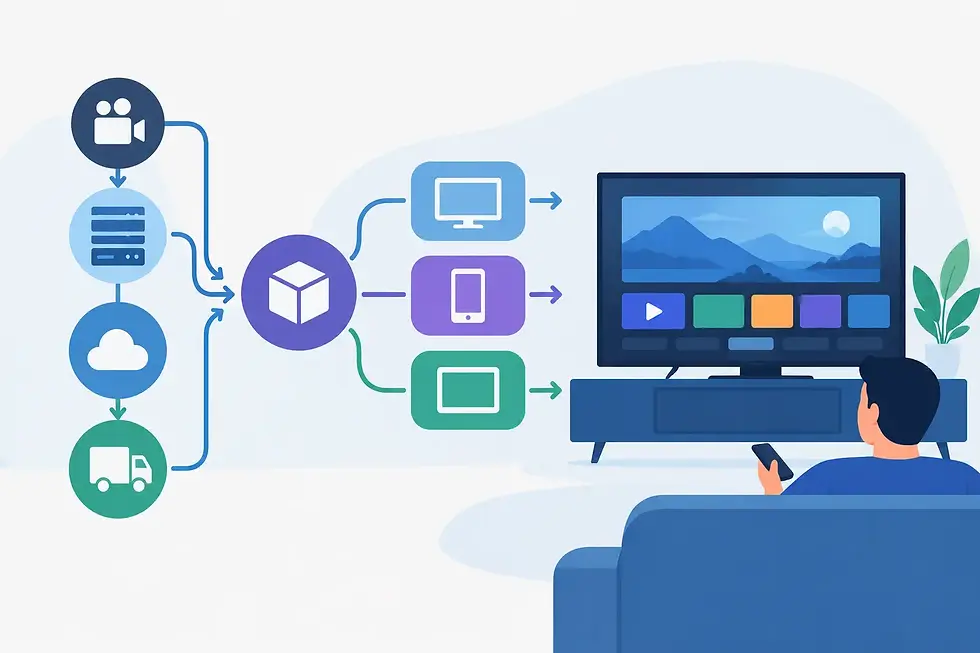
When a publisher has ad-supported streaming content, it needs a way to make those ad slots available to the market. The SSP provides that infrastructure. It connects the publisher’s inventory to eligible demand, applies pricing and access rules, and helps decide which bids or deals win.
From the buyer side, you usually do not log into the SSP as your main execution point unless you are working through a direct supply-side relationship or specialized platform. More often, buyers operate through a DSP or agency buying stack, and the SSP is one of the systems on the other side of that transaction. But even when it is not front and center, it still shapes what you can buy and how efficiently you can buy it.
For example, a publisher may use an SSP to create private marketplace deals, preferred access packages, programmatic guaranteed arrangements, or curated supply paths for specific advertisers. In OTT, these controlled transactions are often more valuable than broad open-market access because buyers want premium programming, brand-safe environments, and verified publisher relationships.
That is why the phrase what is a supply side platform OTT often leads to a broader question: are you accessing real publisher-connected inventory, or are you buying a version of it after several layers of markup and resale?
Why the SSP matters more in OTT than in standard display
In display advertising, supply paths can be messy and still produce acceptable outcomes in some cases. In OTT and CTV, that tolerance is much lower. Premium streaming inventory is limited, high-value, and tied to specific publishers, apps, and viewing environments. Buyers are not just looking for impressions. They are looking for household reach, content quality, completion rates, and brand-safe exposure.
Because of that, the SSP matters more. It can be the difference between direct access to premium supply and indirect access through a chain that reduces accountability. A strong OTT SSP relationship can improve match rates, reduce duplicate paths, and create a cleaner route into top-tier streaming inventory. A weak or overly fragmented one can lead to hidden fees, inconsistent quality, and less clarity on where spend actually went.
This is also where supply-path optimization becomes a buying discipline rather than a technical footnote. If your team is evaluating streaming partners, the SSP relationship should be part of that conversation.
What buyers should expect from a strong OTT SSP
A capable OTT SSP should support premium publisher access, transparent deal structures, and cleaner execution. It should give publishers the tools to protect the value of their inventory while giving buyers a more accountable way to transact.
In practice, that means the SSP should enable direct or near-direct access to streaming supply, clear deal IDs and commercial terms, reliable inventory classification, and fewer unnecessary hops between buyer and publisher. It should also support the type of delivery standards premium advertisers care about, including content quality, fraud mitigation, and accurate reporting.
The trade-off is that direct premium supply is not always the cheapest CPM on paper. But lower CPMs in OTT can be misleading if the inventory quality is diluted or if fees have been embedded across multiple layers. Serious buyers look at effective value, not just sticker price.
The difference between an SSP and a DSP in OTT
This is where confusion usually shows up. A DSP helps buyers purchase media. An SSP helps publishers sell media. In OTT, the DSP is your demand-side buying tool, while the SSP is the publisher-facing infrastructure that exposes inventory to the market.
They work together, but they do not serve the same purpose. If you are an advertiser or agency, your strategy may be built in the DSP, but the quality of the supply path still depends heavily on the SSP side. The DSP can only buy what is made available through the supply chain, and every layer between your bid and the publisher affects transparency and cost.
So when buyers ask what is a supply side platform in OTT, the useful answer is not just that it is sell-side software. It is one of the systems determining whether your streaming budget reaches premium inventory efficiently.
Common problems with OTT supply-side access
Not every supply path marketed as premium is truly direct. Some inventory is bundled, resold, or duplicated across multiple exchanges and intermediaries. That creates avoidable cost and makes it harder to know which path is actually delivering value.
Another issue is reporting opacity. Buyers may see completed impressions and basic delivery metrics, but not the full chain of fees or the exact relationship between the access point and the publisher. In OTT, where CPMs are higher and inventory is more valuable, that lack of clarity can create serious working media loss.
There is also a quality control issue. Premium streaming publishers protect their environments carefully. If your supply path is indirect, you may not get the same consistency in access, prioritization, or deal quality that comes with closer publisher-connected infrastructure.
How to evaluate an OTT supply-side platform
The right question is not whether an SSP exists in the path. It always does somewhere. The question is whether that path is efficient, transparent, and close to the publisher.
Ask how many hops sit between your buy and the actual media owner. Ask whether the inventory comes directly from premium publishers or through resold channels. Ask how fees are handled, how deals are structured, and what level of reporting you receive on supply path and working media.
Also look at execution quality. Can the platform support premium OTT delivery at scale? Does it offer consistent access to major streaming environments? Can it help reduce fragmentation instead of adding another layer to it?
For many buyers, the best answer is a partner built around supply-path simplification rather than another generic access point. That is where a publisher-connected model becomes commercially meaningful. Drive Select Media, for example, is positioned around direct, efficient access to premium OTT inventory with fewer intermediaries in the chain. That approach is not about adding complexity. It is about reducing leakage so more budget reaches premium streaming impressions.
Why this matters for budget accountability
Most media teams already understand that OTT is premium. The more pressing issue is whether they can prove premium efficiency. If too many intermediaries are taking a cut, strong-looking delivery metrics can still mask weak working media.
That is why SSP structure matters to procurement, planning, and performance teams alike. Better supply-side access can mean lower fee drag, stronger publisher alignment, and more confidence in where ads actually ran. It can also make optimization easier because the path itself is cleaner.
In streaming, infrastructure decisions affect media outcomes. Buyers who treat the SSP as an invisible backend detail usually end up paying for that assumption somewhere in the supply chain.
If you are evaluating OTT partners, do not just ask what inventory they can reach. Ask how they reach it, how many layers sit in the middle, and how much of your budget is doing real work once the campaign goes live. That is usually where the biggest difference shows up.


Comments