

Programmatic Fee Transparency Explained

If your CTV or online video campaign clears at a strong CPM but too little budget reaches the publisher, the issue usually is not performance. It is the path. Programmatic fee transparency matters because every hop between buyer and publisher can take a cut, and those cuts add up fast in streaming.
For advertisers and agencies buying premium OTT, this is not a theoretical supply-chain problem. It is a working media problem. The more opaque the transaction, the harder it is to see which fees were necessary, which were duplicated, and which delivered no meaningful value. That is where programmatic fee transparency stops being a reporting preference and becomes a budget control tool.
What programmatic fee transparency actually means
At its simplest, programmatic fee transparency is the ability to see how much of your media dollar goes to the publisher and how much is retained by each platform, reseller, exchange, or service layer involved in delivery. In a clean setup, those costs are visible, attributable, and understandable. In a messy one, they are blended, hidden, or buried in a chain that few buyers can fully inspect.
This matters more in streaming than many teams admit. Premium video inventory often carries justified value because of content quality, audience scale, and brand safety. But premium inventory should not be confused with an open invitation for unnecessary tolls throughout the supply path. A high-quality impression can still be bought inefficiently.
Transparency also has limits. Not every fee is bad, and not every intermediary is avoidable. Some platforms provide demand access, identity capabilities, ad serving, measurement, or workflow efficiencies that are worth paying for. The real question is whether each fee is visible and whether it contributes to better outcomes.
Why fee opacity hurts working media
Most buyers already know there is slippage in the programmatic supply chain. The bigger problem is that slippage is often normalized. A campaign launches, impressions deliver, and pacing looks fine, so the underlying economics go unchallenged.
That is expensive complacency. When too many intermediaries sit between the advertiser and the publisher, a larger share of spend is consumed before the ad ever reaches the screen. The result is less working media, fewer premium impressions, and weaker household reach for the same budget.
In CTV and OTT, this can distort planning in practical ways. Teams may think they are buying enough premium streaming scale, when in reality too much spend is being absorbed by fees. They may also compare one supply source against another without a true apples-to-apples view of net media value. Lower CPMs can look attractive until you examine what percentage of spend actually funded delivery inside premium content environments.
For agencies, opacity creates another issue: accountability. Clients increasingly ask where their money went, what the tech stack cost, and whether the supply path was intentionally chosen. If the answer depends on a patchwork of platform disclosures, the buyer is left defending complexity rather than performance.
Where fees tend to accumulate
Programmatic costs rarely appear as one dramatic line item. They build gradually across the transaction. DSP fees are standard, but the chain may also include SSP take rates, exchange fees, reseller margins, data charges, verification costs, audience onboarding fees, and operational markups tied to managed-service layers.
Sometimes the problem is not one fee. It is duplication. A buyer may pay for access through multiple layers that each claim to add unique value while essentially routing to the same publisher inventory. In those cases, the campaign is not buying more quality. It is paying more people to touch the same impression.
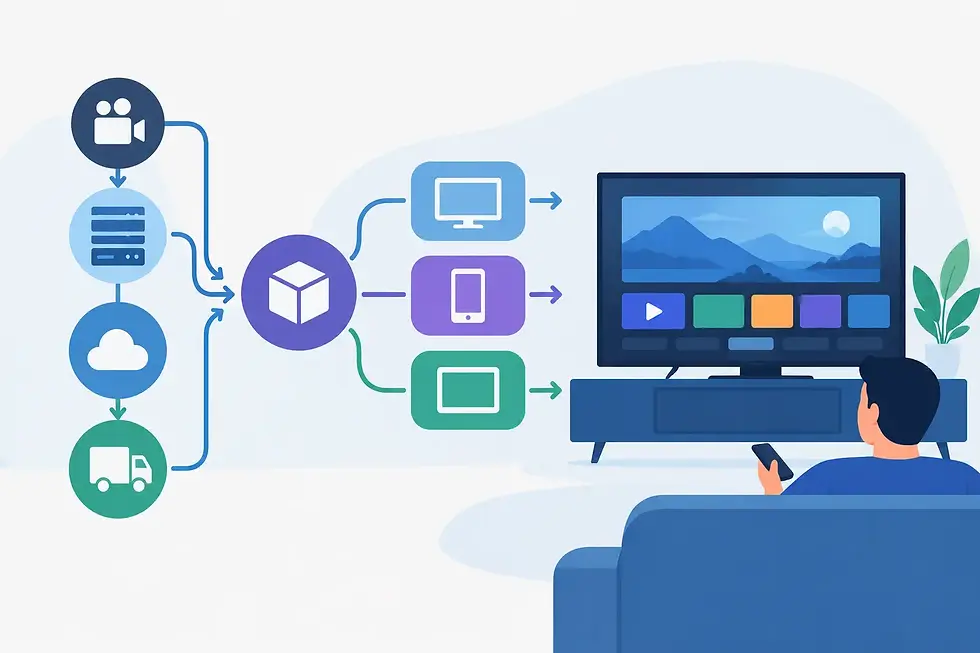
This is why supply-path simplification matters. Fewer intermediaries generally means fewer places for cost leakage to hide. It also tends to improve clarity around who owns the publisher relationship, who controls the auction mechanics, and who is responsible when performance or delivery questions arise.
Programmatic fee transparency in premium streaming
Programmatic fee transparency becomes especially important when the goal is premium streaming access at scale. Buyers are not just purchasing impressions. They are paying for trusted media environments, full-episode viewing, household reach, and a better brand context than the open web can usually provide.
That premium should show up on screen, not disappear in the pipes.
When buyers work through direct, publisher-connected supply paths, the economics tend to become easier to evaluate. The chain is shorter. The number of parties taking a margin is lower. Reporting is more straightforward. Most important, more of the budget can move into actual media delivery.
That does not mean every direct path is automatically better. Some direct deals carry fixed costs, limited flexibility, or narrower optimization options. But when the objective is premium inventory with stronger accountability, a simplified path usually gives buyers a better financial picture than a heavily intermediated one.
How buyers should evaluate transparency
The best test is simple: can your partners clearly show who takes what, and can they explain why each fee exists?
If the answer is vague, bundled, or delayed, transparency is weak. If the answer includes identifiable cost layers, publisher access details, and a clear explanation of how media dollars flow, you are closer to a trustworthy model.
For media buyers, this evaluation should go beyond rate cards. Ask how inventory is sourced, whether resellers are involved, how many platforms sit between bid and publisher, and what percentage of spend becomes working media. Ask whether the same publisher inventory can be reached more directly. Ask whether there are managed-service costs on top of platform costs. These are operational questions, not academic ones.
It also helps to separate necessary complexity from avoidable complexity. Cross-publisher execution, audience targeting, and measurement can require multiple tools. That is normal. But complexity should improve outcomes, not just obscure economics.
What a better model looks like
A more accountable buying model is built around direct access, fewer intermediaries, and clear financial visibility. In practice, that means aligning media execution as close to premium publisher supply as possible while reducing redundant hops across the chain.
For advertisers focused on OTT, CTV, and online video, this usually delivers three advantages. First, more budget reaches the publisher, which increases working media. Second, the inventory quality is easier to validate because the path to supply is more direct. Third, campaign troubleshooting becomes faster because there are fewer layers to audit when something looks off.
This is the commercial case for streamlined infrastructure. It is not only about cleaning up reporting. It is about improving the ratio between spend and actual media delivery.
That is also why some buyers are rethinking broad marketplace buying for premium video goals. Open access can provide scale, but it can also introduce unnecessary path complexity, especially when reseller activity clouds the route to premium publishers. When the plan calls for major streaming environments, direct supply relationships often create a better balance of quality, efficiency, and accountability.
The trade-off buyers should keep in mind
There is no universal rule that the cheapest path is the best one. Lower visible fees do not always mean stronger performance, and some specialized services earn their keep. Transparency is not about stripping every cost out of the process. It is about understanding costs well enough to make intentional trade-offs.
A buyer may accept a higher fee if it brings unique audience access, stronger measurement, or materially better execution. What buyers should reject is paying extra without knowing why. Hidden economics weaken planning discipline and make optimization harder.
That is why programmatic fee transparency should be treated as a buying standard, not a nice-to-have. If a partner cannot show how your budget moves through the system, you cannot fully evaluate efficiency, and you cannot confidently defend media strategy to internal stakeholders or clients.
For brands and agencies that care about premium streaming outcomes, the cleaner path usually wins. More working media. Fewer intermediaries. Better visibility into what your budget is actually doing. That is the standard buyers should expect, and it is the reason companies like Drive Select Media keep pushing supply-path simplification instead of adding another layer to the stack.
The useful question is not whether fees exist. They do. The question is whether each one earns its place between your budget and the screen.


Comments