

How to Streamline OTT Supply Paths for Working Media

A streaming campaign can appear efficient in a buying platform while losing meaningful budget before an ad ever reaches a premium screen. Knowing how to streamline OTT supply paths means tracing where dollars, bid requests, data fees, and reseller margins enter the transaction - then removing the layers that do not improve reach, quality, or performance.
For advertisers and agencies buying CTV, OTT, and online video at scale, this is not a technical housekeeping exercise. Supply-path decisions affect working media, household reach, frequency, brand safety, and the ability to explain exactly where a campaign ran.
Why OTT Supply Paths Get Expensive
OTT inventory is often sold through a chain of platforms, exchanges, resellers, and data partners. Each participant may have a legitimate role in some transactions. The problem begins when multiple parties are involved simply because the buying path has not been evaluated.
A single premium publisher impression may be available through several routes. One route may be directly connected to the publisher or a designated sales channel. Another may pass through additional exchanges or resellers before reaching the buyer. If both paths access the same audience and inventory, the longer path can add cost without adding value.
That cost does not always show up as one obvious line item. It can be distributed across platform fees, supply-side fees, managed-service charges, data costs, and undisclosed margins. The result is less budget reaching the screen and less certainty about the actual media environment purchased.
How to Streamline OTT Supply Paths
The goal is not to eliminate every technology partner. It is to use only the partners that create a clear commercial or operational advantage. Start by identifying the supply paths that deliver premium inventory, measurable performance, and transparent economics.
Map every route to inventory
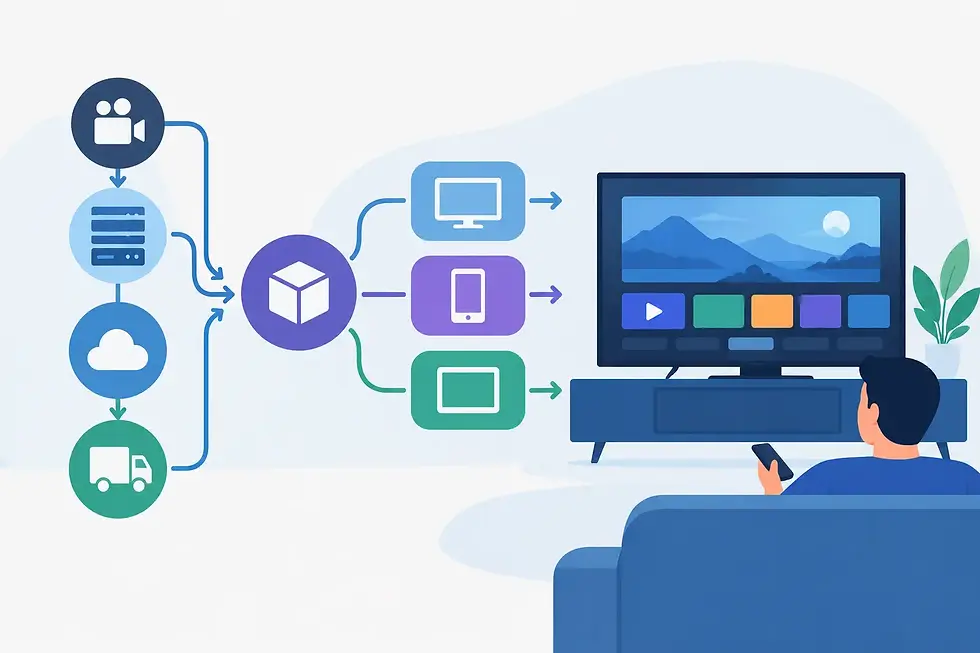
Ask your buying team, agency, or platform partners to document how your OTT budget reaches each publisher. The map should show the buying platform, exchange or supply-side platform, reseller, publisher relationship, data providers, and any managed-service layer involved in delivery.
This exercise often exposes duplicate access. The same publisher may appear under multiple deal IDs, marketplaces, or reseller packages. Without a path-level view, buyers can bid against themselves, pay different effective rates for similar impressions, or allocate budget to inventory they assumed was direct but is not.
Do not stop at publisher names. Separate inventory by publisher, app, device environment, market, audience segment, deal type, and transaction path. A direct deal for a premium CTV app is not interchangeable with a broadly labeled streaming bundle that includes mixed-quality supply.
Prioritize direct publisher-connected access
When premium inventory is a campaign requirement, favor paths that have a direct and verifiable connection to the publisher. Direct access can reduce unnecessary fees, improve clarity around inventory source, and give buyers more confidence in where ads appear.
Direct does not always mean a buyer contracts individually with every publisher. That approach can create operational burden and limit scale. It means working through a supply partner that can demonstrate its publisher relationships, explain its transaction role, and provide access without stacking avoidable intermediaries.
For a national campaign, the right path may combine several premium publisher relationships through one accountable supply-side partner. For a narrowly targeted effort, a direct publisher deal may be worth the extra setup. The answer depends on campaign scale, audience requirements, reporting needs, and the value of the inventory.
Consolidate duplicate deal access
More deal IDs do not automatically create more opportunity. They can create fragmented pacing, overlapping reach, inconsistent pricing, and more complicated reporting. Review all OTT deals that point to the same publisher groups or inventory categories and determine which path should remain active.
Keep the paths that offer the best combination of premium access, delivery reliability, transparent fees, and campaign controls. Pause routes that cannot clearly explain their source of supply or that consistently produce weaker quality at a higher effective cost.
Consolidation also makes optimization more meaningful. When spend is dispersed across overlapping routes, it is difficult to tell whether a performance difference reflects the audience, the creative, the publisher, or simply the path used to purchase the impression.
Set standards for transparency before launching
Supply-path transparency should be part of the media brief, not a post-campaign request. Require reporting that identifies the publisher or app environment, transaction type, impression volume, spend, effective CPM, completion metrics, and fees where applicable.
Buyers should also establish a clear definition of premium inventory. A recognizable publisher name is not enough if reporting cannot confirm the actual viewing environment. Define acceptable apps, content categories, device types, geography, and brand-safety controls before budget is activated.
When a partner cannot provide this level of clarity, the issue is not merely reporting. It may signal that the supply path itself is too indirect to support accountable media buying.
Measure Working Media, Not Just CPM
A lower CPM does not necessarily mean a better OTT buy. A low price can reflect lower-quality inventory, hidden supply-path costs, weak delivery controls, or excessive frequency in a limited audience pool. The more useful question is how much of the total budget becomes effective exposure in the intended premium environment.
Working media is the portion of spend that is actually applied to media delivery rather than absorbed by layers of fees and margins. It should be evaluated alongside reach quality, completed views, household frequency, and the publisher mix.
For example, one path may show a slightly higher CPM but place more of the budget into premium publisher inventory with cleaner reporting and stronger completion rates. Another may look cheaper but include opaque resold supply and more budget leakage. The first path may produce a better commercial outcome even before downstream brand or conversion results are measured.
This is why supply-path optimization should not be handed off as a procurement-only task. Media, programmatic, finance, and measurement teams all have a stake in the decision. The path determines both the economic efficiency of the buy and the quality of the signal available for optimization.
Build an Operating Model That Stays Efficient
Supply-path cleanup is not a one-time project. Publishers change their sales arrangements, new intermediaries enter the market, and platform configurations evolve. A buying path that was efficient six months ago may no longer be the best route.
Create a regular review process for OTT supply. Monthly checks can catch pacing issues and unexpected inventory shifts. Quarterly reviews are better suited for fee analysis, deal consolidation, publisher-level performance, and partner accountability. Major campaign planning should include a fresh assessment of whether the current path still matches the inventory strategy.
The operating model should also define who can add new supply sources and what proof is required. At minimum, new paths should be evaluated for publisher authorization, inventory quality, fee structure, reporting depth, overlap with existing access, and expected incremental reach. This prevents the supply chain from becoming crowded again through one-off tests and unmanaged marketplace additions.
Where a Supply-Path Audit Adds Value
Many advertisers know they have too many layers in their OTT buying structure but cannot see which ones are consuming budget or duplicating access. A focused audit can compare current campaign routes against direct publisher-connected alternatives, identify overlapping deals, and calculate where more working media may be available.
The strongest audit is practical. It should not end with a generic list of supply-chain concerns. It should identify the inventory currently being bought, the route used to access it, the fees or margins affecting the transaction, and the actions needed to improve efficiency without sacrificing scale or premium reach.
Drive Select Media approaches this problem from the supply side: giving advertisers and agencies a more direct path to premium streaming publishers while reducing unnecessary intermediary layers. The objective is straightforward - put more media dollars toward the screen and provide clear accountability for delivery.
A cleaner OTT supply path gives your team more than a lower-cost transaction. It gives you a defensible answer when leadership asks where the budget went, what audiences it reached, and whether every partner in the chain earned its place.


Comments